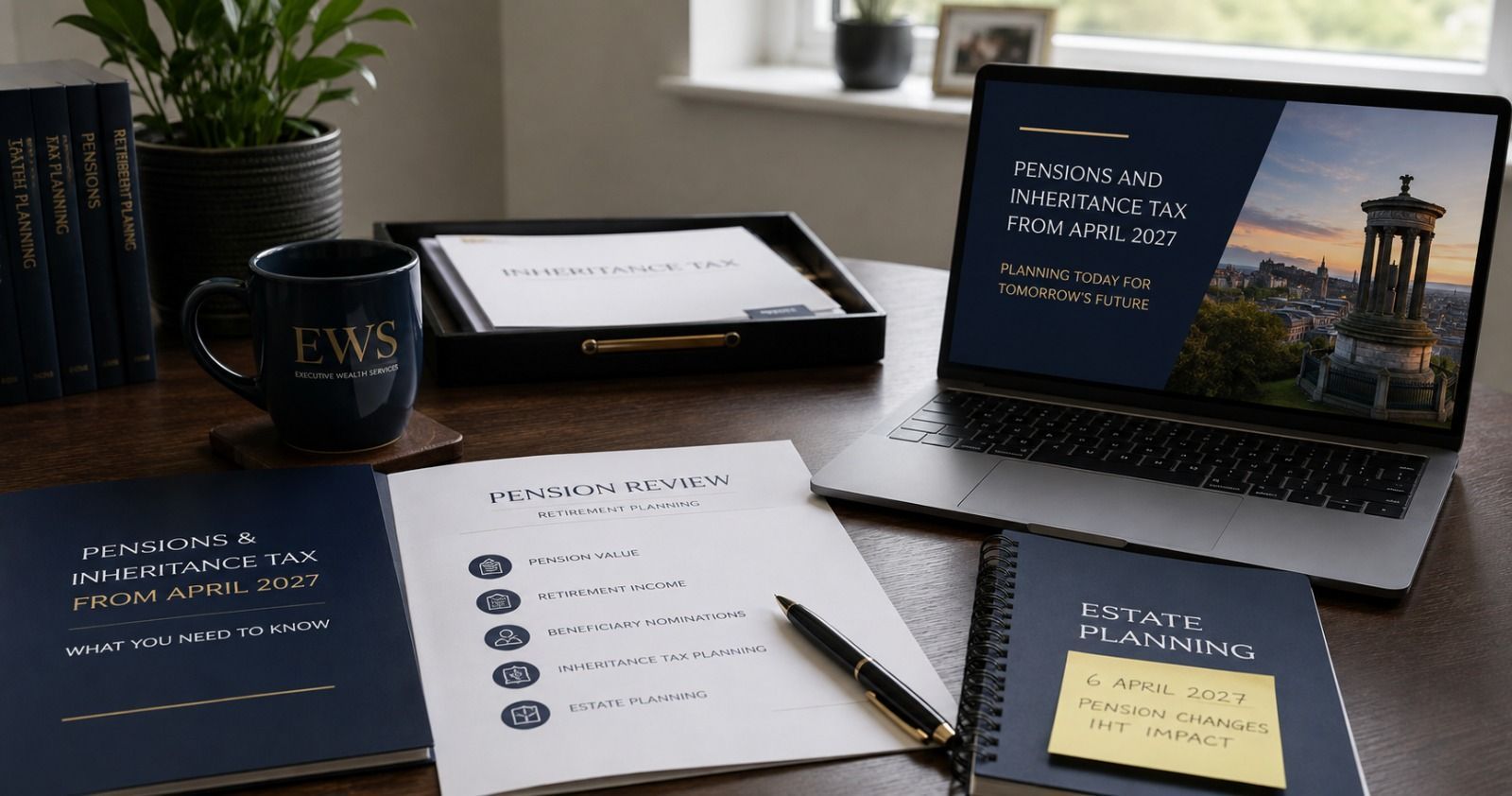
From April 2027, one of the most important estate planning rules in the UK is expected to change.
For many years, pensions have often sat outside a person’s estate for inheritance tax purposes. This meant that, in many cases, unused pension funds could be passed to beneficiaries more tax-efficiently than savings, investments or property.
That position is changing.
From 6 April 2027, the government plans to bring unused pension funds and certain pension death benefits into a person’s estate for inheritance tax purposes. For families who have built up significant pension savings, property wealth, business assets or investment portfolios, this could have a major impact on how retirement and estate planning should be approached.
This is not just a technical tax change. It could alter the way people think about drawing income in retirement, gifting wealth during their lifetime, passing money to children or grandchildren, and making sure their estate is structured properly.
What Is Changing From April 2027?
Under the current rules, many pension funds are not normally counted as part of your estate for inheritance tax when you die.
That has made pensions a powerful planning tool. Some people have deliberately drawn income from ISAs, savings or investment accounts first, while leaving pension funds untouched for as long as possible.
The logic was simple: assets inside the estate could be exposed to inheritance tax, while pensions could often pass outside the estate.
From April 2027, that planning logic may no longer work in the same way.

Estate Value
Unused pensions may need to be included when calculating the value of an estate for inheritance tax purposes.
Tax Exposure
A pension that previously sat outside the estate could push a family into a different inheritance tax position.
Beneficiaries
The amount eventually received by children, grandchildren or other beneficiaries may be affected.

Why This Matters For Families
Inheritance tax is already a concern for many families, particularly where property values have risen over time. A family home, savings, investments and pension wealth can quickly create an estate that looks very different from the one people had in mind when their retirement plan was first built.
The pension change could affect people who would not traditionally have considered themselves especially wealthy.
Someone may own a family home, hold savings or investments, and have a pension pot built up over decades of work. Individually, each part may seem manageable. Combined, and especially once the pension is included, the estate position could look very different.
Retirement planning and estate planning now need to be reviewed together.
The 2027 change links pensions, retirement income, wills, beneficiary nominations, inheritance tax, gifting and family wealth transfer. For many families, these areas can no longer be treated as separate conversations.
- Pension planning
- Retirement income planning
- Inheritance tax planning
- Wills and estate planning
- Beneficiary nominations
- Family wealth transfer
- Later-life cash flow planning
- Gifting during lifetime
The Old Planning Logic May Need To Be Reviewed
A common approach in retirement planning has been to preserve pension funds for as long as possible.
That made sense under the current rules because pensions could often be one of the most tax-efficient assets to leave behind. Many retirees therefore chose to draw from cash, ISAs, general investment accounts or other taxable assets before touching their pension.
From 2027, that approach may need to be reconsidered.
This does not mean people should rush to empty their pensions. Pensions remain highly valuable for retirement income, tax relief, investment growth and long-term planning. However, the order in which assets are used may become more important.

When To Draw
The timing and order of withdrawals from pensions, ISAs, cash and investments may need careful review.
Gifting
Lifetime gifting may be useful for some families, but only where affordability and long-term security have been tested.
Tax Trade-Offs
Reducing inheritance tax exposure can create income tax or cash-flow consequences if done without advice.
Questions Families May Need To Ask
Some people may need to review whether their existing retirement and estate planning strategy still makes sense once pensions are included in the inheritance tax calculation.
Should I still draw income from non-pension assets first?
What was tax-efficient under the old rules may not be the best approach once unused pensions form part of the estate calculation.
Should I use some pension income earlier?
Some clients may need to consider whether drawing from pensions earlier could support retirement income, family gifting or estate planning objectives.
Could my beneficiaries face more tax than expected?
The interaction between inheritance tax, pension death benefits and income tax needs careful review before any major decisions are made.
Are my will and pension nominations still aligned?
Beneficiary nominations, expression of wish forms and wills should work together as part of one joined-up family wealth plan.

Children, Grandchildren And Beneficiary Nominations
Many people build up pensions with a simple intention: to provide security in retirement and leave anything unused to their family.
The 2027 change does not prevent people from passing pension wealth to children or grandchildren, but it may change the tax outcome.
If unused pension funds are included in the estate, the amount passing to beneficiaries could be reduced by inheritance tax. Depending on the age at death and how pension benefits are later accessed, beneficiaries may also need to consider income tax.
A pension nomination form, sometimes called an expression of wish, tells the pension provider who you would like to receive pension benefits when you die. It is not the same as a will, and it should not be treated as a one-off form that is forgotten about.
Could Your Pension Push Your Estate Over The IHT Threshold?
This is one of the most important questions.
Many people think of inheritance tax as applying only to very large estates. However, once property, savings, investments and pensions are combined, more families may find themselves within scope.
The issue is not just the size of the pension. It is the total estate value, the available allowances, who the assets are passing to, whether the residence nil-rate band applies, whether any allowances are transferable, and whether earlier gifts have been made.
This is why simple online calculators often miss the wider planning point. The pension change needs to be considered as part of the full family estate picture.
The key question is not simply “How much is in my pension?”
The better question is: “How does my pension interact with my property, investments, family objectives, tax allowances and future income needs?”
What Should You Review Before 2027?
The best starting point is not to make rushed decisions. It is to review the whole position properly.
Review Pension Values
Gather workplace pensions, personal pensions, SIPP details, death benefit nominations and recent statements.
Review Your Will
Your will and pension nominations should work together, especially where family wealth and inheritance tax are involved.
Check Beneficiaries
Outdated nomination forms can create confusion, delays or unintended outcomes after death.
Review Income Strategy
The order in which pensions, ISAs, cash and investments are used may become more important.
Consider Gifting Carefully
Gifting can reduce an estate, but affordability, care costs, inflation and long-term security must be considered.
Review Protection
Some families may need to consider life assurance, trusts or wider estate planning tools as part of a joined-up plan.
Why Acting Early Matters
The rule change is expected from April 2027, but waiting until then may leave too little time to plan properly.
Estate planning is rarely solved by one action. It often involves several connected steps: understanding the estate, reviewing pensions, checking nominations, modelling income, discussing family objectives and coordinating financial and legal advice.
Starting early gives families more control. It also allows decisions to be made calmly, rather than under pressure.

The bigger point: retirement planning and estate planning are now connected.
A pension is no longer just a retirement income vehicle. It may also become a key part of the estate planning conversation. The question is no longer simply, “Will I have enough income in retirement?” It is also, “How should I use my assets during retirement so that I protect my lifestyle, manage tax and pass wealth on in the right way?”
What Should You Do Now?
If you have a significant pension, own property, or intend to leave wealth to your family, this is a sensible time to review your position.
The worst response is panic. The best response is planning.
- Find out what your pensions are worth
- Check who your pension beneficiaries are
- Review your will
- Understand your likely inheritance tax exposure
- Review how you are drawing income in retirement
- Consider whether gifting is affordable
- Keep clear records for your family
- Take advice before making major changes
Final Thoughts
The 2027 pension inheritance tax change could become one of the most significant estate planning shifts for years.
It does not mean pensions are no longer valuable. They remain an important part of retirement planning. But it does mean that families may need to rethink how pensions, investments, property and inheritance tax planning fit together.
For some, the impact may be modest. For others, especially those with larger pension pots and property wealth, the change could be substantial.
The key is to understand your position before the rules change.
A well-structured plan can help you protect your retirement income, support your family, and make informed decisions about how your wealth is passed on.
Concerned About How The 2027 Pension IHT Change Could Affect Your Estate?
EWS Financial Advisers can help you review your pensions, retirement income strategy and wider financial planning position. We can help you understand how your pension fits into your estate, whether your current approach still makes sense, and what planning steps may be worth considering before April 2027.
This article is for general information only and does not constitute personal financial advice. Tax treatment depends on individual circumstances and may change. Estate planning, tax planning, trusts and will writing may not be regulated by the Financial Conduct Authority.
Pensions And Inheritance Tax FAQs
Will pensions be subject to inheritance tax from 2027?
From 6 April 2027, unused pension funds and certain pension death benefits are expected to be included in a person’s estate for inheritance tax purposes. The impact will depend on the value of the estate, available allowances and who receives the pension benefits.
Does this mean my pension will definitely create an inheritance tax bill?
No. The pension will need to be considered alongside the rest of your estate. Some estates will remain below the available inheritance tax thresholds, while others may become taxable once pension wealth is included.
Should I start taking money out of my pension before 2027?
Not without advice. Taking pension income could reduce the value of your pension for inheritance tax purposes, but it may create income tax consequences and could affect your long-term retirement income. The right approach depends on your circumstances.
Do I need to update my pension beneficiaries?
It is sensible to review your pension beneficiary nominations, especially if your family circumstances have changed. Your nomination form should work alongside your will and wider estate plan.
Will my spouse or civil partner pay inheritance tax on my pension?
Transfers between spouses and civil partners are generally treated differently for inheritance tax purposes, but planning may still be needed, especially on second death when assets pass to children, grandchildren or other beneficiaries.
What should I review before April 2027?
You should review your pension values, beneficiary nominations, will, retirement income plan, inheritance tax exposure and any lifetime gifting strategy. Taking advice early gives you more time to plan properly.