Pension &
Retirement Planning
For clients approaching retirement, reviewing existing pensions or planning how to create long-term income from accumulated wealth.
View Pension & Retirement PlanningPension drawdown can give you more flexibility in retirement, but it also places more responsibility on how income is taken, how the pension remains invested and how long the money needs to last.
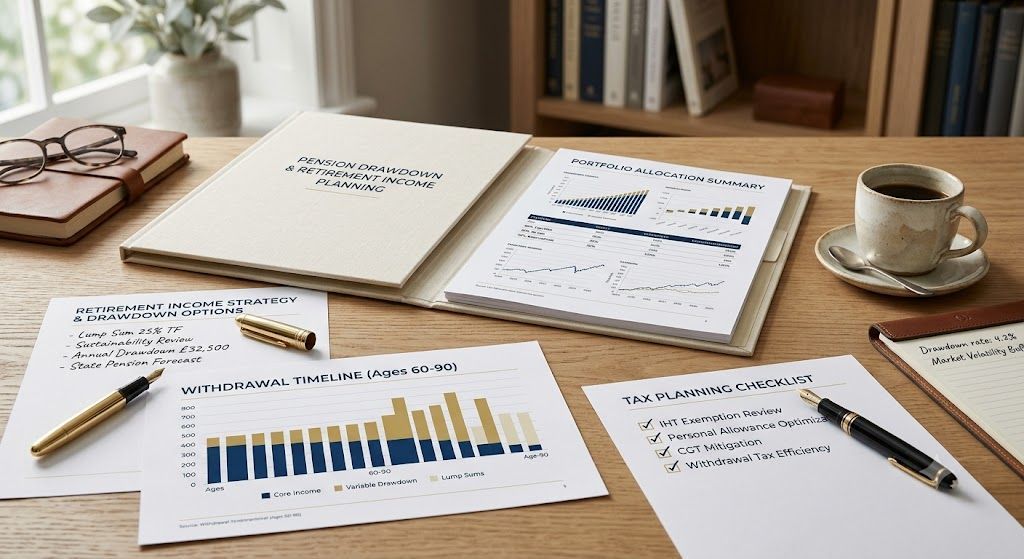
Pension drawdown should be reviewed as part of a wider plan for income, tax, investment risk and long-term financial security.

Pension drawdown, often called flexi-access drawdown, allows you to keep pension funds invested while taking income from them. This can provide more flexibility than buying a guaranteed income product, but it also means investment performance, withdrawals, charges, tax and longevity risk all need to be managed carefully.
For many clients, drawdown should be considered as part of wider pension and retirement planning, rather than as a one-off decision at retirement.
The right approach depends on your objectives, tax position, other assets, investment risk tolerance and the level of income certainty you need in retirement.
Pension drawdown can suit some clients well, but it is not appropriate for everyone. The right option depends on income needs, attitude to investment risk, other assets, tax position, family circumstances and the level of certainty required in retirement.
Drawdown may be helpful where income needs vary from year to year, or where clients want flexibility over how and when pension benefits are taken.
Pension funds can remain invested, giving the potential for future growth, but this also means the plan must be reviewed and managed over time.
Withdraw too much too soon, and there is a risk of reducing future retirement income. Sustainable withdrawal planning is central to drawdown advice.
Pension drawdown advice should consider the whole retirement picture, including pensions, investments, cash reserves, tax allowances, family priorities and long-term care considerations. For broader retirement planning, see our pension and retirement planning page.

Drawdown can offer flexibility, but the pension remains exposed to investment risk. The plan must also take account of how withdrawals, tax, inflation and market conditions may affect future income.
Large or irregular withdrawals can reduce the pension fund more quickly than expected, especially in the early years of retirement.
Taking withdrawals during poor market periods can have a lasting effect on how long the pension fund may support retirement income.
Retirement may last for several decades, so the plan must consider rising costs, changing needs and the risk of outliving the fund.
Withdrawals can affect taxable income, allowances and wider planning, so the order and timing of income should be considered carefully.
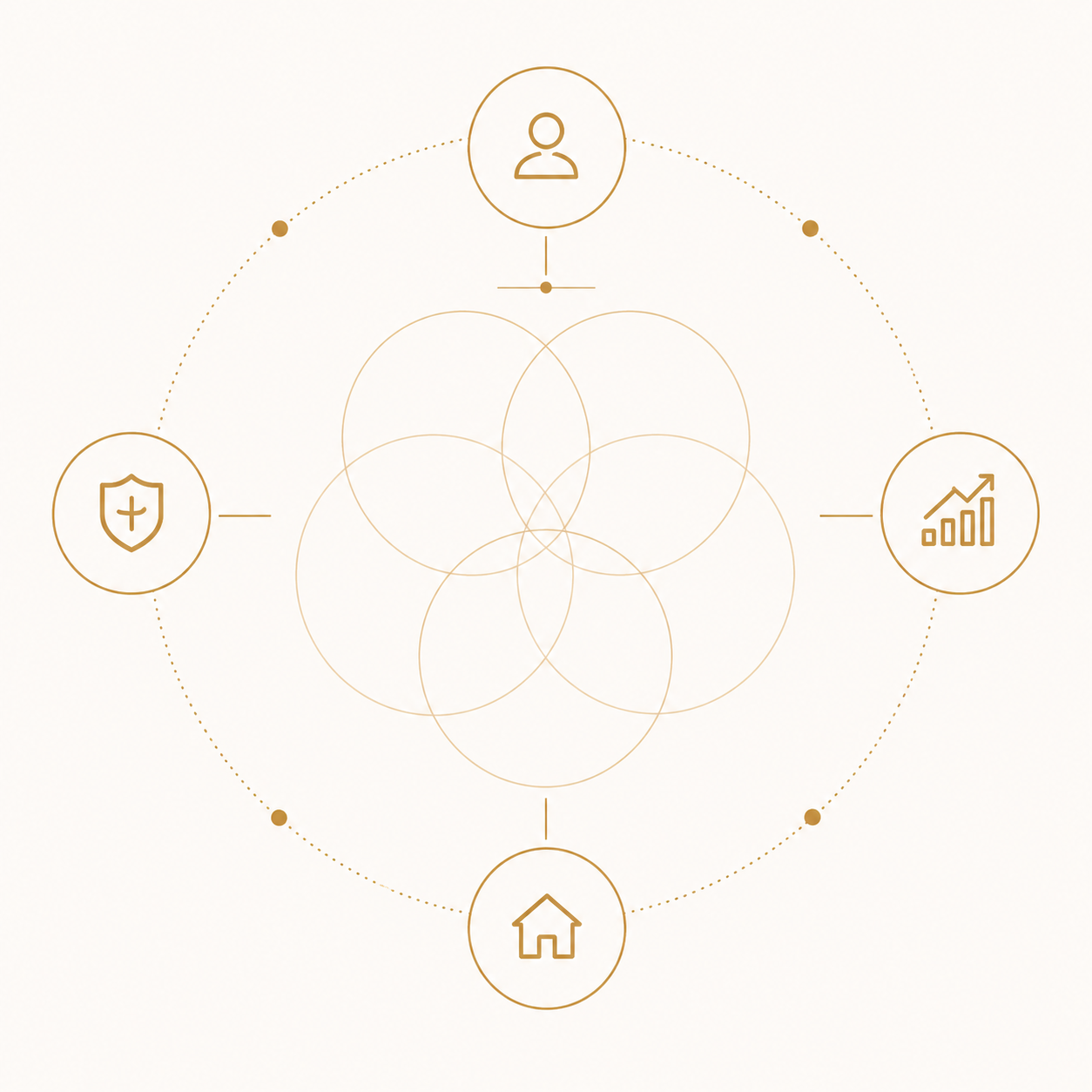
Pension drawdown is only one way to use retirement savings. The right approach may involve drawdown, a guaranteed income, keeping funds invested, or using a combination of options over time.
Drawdown allows pension funds to remain invested while income is taken as needed. It can provide flexibility, but income is not guaranteed and the fund can fall in value.
An annuity can provide a guaranteed income for life or for a fixed period. It may suit clients who value certainty, but it usually gives less flexibility once set up.
Some clients may not need pension income immediately. In that case, keeping pensions invested may preserve flexibility, but the plan still needs monitoring.
There is no single best retirement income route for everyone. The right decision should be based on income needs, tax position, investment risk, health, family priorities and wider investment advice.
How pension income is taken can affect tax, allowances and long-term retirement sustainability. Pension drawdown should be planned alongside wider tax year planning, savings and investment decisions.
Many people can usually take part of their pension as tax-free cash, subject to the pension rules and personal circumstances. The remaining pension fund may then be used to provide taxable income, kept invested, or accessed over time.
The decision is not simply whether to take the maximum lump sum. It is whether the timing, amount and structure of withdrawals support the client’s income needs, tax position and long-term plan.
EWS helps clients review whether drawdown is suitable, how retirement income should be structured and how the pension should be managed once withdrawals begin.
Arrange a Pension Drawdown ReviewWe start by understanding your income needs, desired lifestyle, existing pensions, other assets, family priorities and the level of certainty you want in retirement.
We assess the structure, charges, investment options and flexibility of your current pensions, including whether they are suitable for drawdown planning.
We help plan how income may be taken, how withdrawals interact with tax, and how the pension should remain invested to support long-term retirement needs.
Drawdown is not a one-off decision. We review the plan as markets, tax rules, income needs and personal circumstances change.
For clients who need wider advice across pensions, investments and retirement income, visit our pension advice Edinburgh page or our investment advice Edinburgh page.
Pension drawdown decisions can affect retirement income, tax, investment risk and family planning. These answers give a starting point, but regulated advice should be based on your own circumstances.
Speak to EWSPension drawdown allows you to keep pension funds invested while taking income from them. It can offer flexibility, but income is not guaranteed and the fund can fall in value.
No. Drawdown may suit clients who want flexibility and can accept investment risk, but it may not suit those who need guaranteed income or who are uncomfortable with market volatility.
Many people can usually take part of their pension as tax-free cash, subject to pension rules and personal circumstances. The remaining fund may then stay invested and be accessed over time.
The main risks include taking too much income, poor investment performance, inflation, charges, changing tax rules and the possibility that the pension fund may not last as long as needed.
Drawdown should usually be reviewed regularly because income needs, investment markets, tax rules and personal circumstances can change. Ongoing review is a key part of sustainable retirement income planning.
Yes. EWS can review existing pension drawdown arrangements, including income levels, investment strategy, charges, tax considerations and how the plan fits with wider retirement planning.
Pension drawdown can offer flexibility, but it should be planned carefully. EWS can help you review your pension arrangements, income needs, tax position, investment strategy and wider retirement objectives.
OUR PROCESS
Executive Wealth Services is an independent financial planning firm with an office in Edinburgh, advising clients across the city and wider Scotland. We work with professionals, business owners, retirees, and families who want clear advice on pensions, investments, retirement planning, inheritance tax, and long-term wealth structuring.
Our role is to help you understand what you already have, where risks or inefficiencies may exist, and how your financial arrangements can be organised into a coherent plan for today, retirement, and future generations.

For clients approaching retirement, reviewing existing pensions or planning how to create long-term income from accumulated wealth.
View Pension & Retirement PlanningFor clients holding cash, ISAs, portfolios or accumulated wealth who want a more structured, tax-aware investment strategy.
View Savings & Investment AdviceFor families who want to preserve wealth, reduce avoidable tax exposure and plan how assets pass between generations.
View Inheritance Tax PlanningFor directors and business owners who need to connect company profits, pension contributions, tax-efficient extraction and personal wealth.
View Business Owner PlanningWe bring clarity, structure and long-term focus to help you make confident financial decisions today and in the years ahead.
Chartered Financial Advice in Edinburgh & Glasgow
Edinburgh Office
Phone: 0131 564 1222
mail: hello@ewsfinancialadvisers.co.uk
Address: Suite 3, Thistle House 21/23 Thistle Street Edinburgh EH2 1DF
Glasgow Office
Phone: 0141 564 1222
mail: hello@ewsfinancialadvisers.co.uk
Deaf-friendly service available · Interpreters can be arranged
The information contained within this website is subject to the UK regulatory regime and is therefore primarily targeted at consumers based in the UK. Executive Wealth Services Limited is Authorised and Regulated by the Financial Conduct Authority. We can be found on the FCA Register under Number 822396.
Registered address Suite 3, Thistle House, 21/23 Thistle Street, Edinburgh, EH2 1DF. Company number SC607307 Telephone 0131 564 1222 or email enquiries@ewsfinancialadvisers.co.uk