Is ESG Still a Thing in 2026? What Investors Should Consider
ESG investing has had a difficult few years.
After a period when environmental, social and governance investing became one of the most talked-about areas of investment management, the conversation has become more measured. Some investors remain committed to aligning their money with their values. Others are more sceptical, especially where ESG labels have been used loosely or where performance has disappointed.
That does not mean ESG has disappeared. It means investors need to look beyond the label.
In 2026, the more useful question is not simply whether ESG is “good” or “bad”. The better question is whether a particular investment approach is suitable, properly diversified, transparent, cost-conscious and aligned with the client’s wider financial plan.
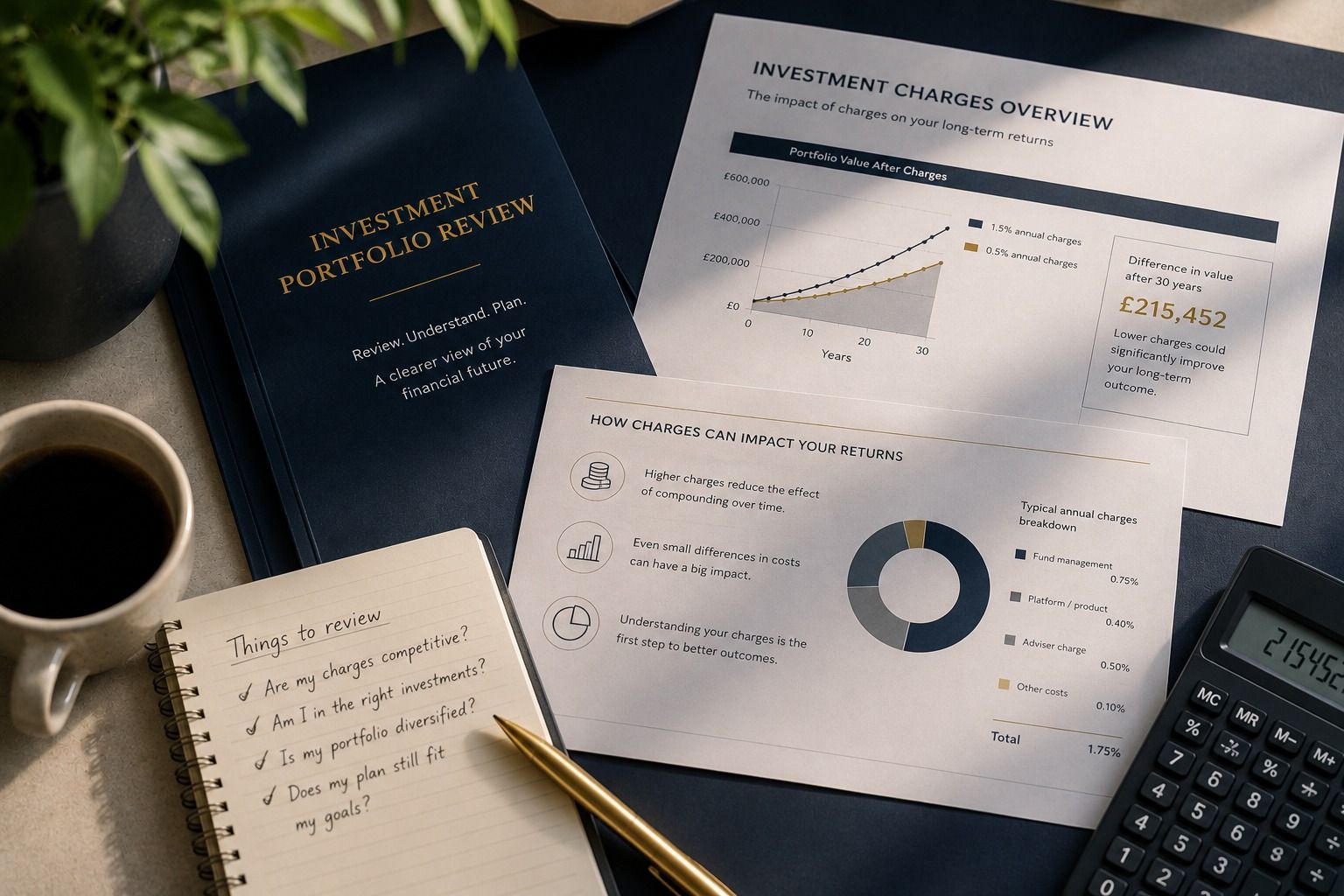
Image title: ESG Investing 2026 EWS Financial Advisers
Alt text: ESG investment planning documents showing sustainability risk diversification and long-term portfolio considerations
What does ESG investing mean?
ESG stands for environmental, social and governance. These are factors that may be considered when assessing companies, funds or investment strategies.
Environmental factors may include:
- Climate impact
- Carbon emissions
- Energy use
- Waste management
- Resource efficiency
- Exposure to environmental regulation
Social factors may include:
- Employee welfare
- Supply chain standards
- Product safety
- Community impact
- Human rights considerations
- Customer treatment
Governance factors may include:
- Board structure
- Executive pay
- Shareholder rights
- Corporate behaviour
- Risk management
- Transparency and reporting
Different funds interpret ESG in different ways. Some exclude certain sectors. Others invest in companies they believe are improving. Some focus on sustainability themes, while others integrate ESG analysis into broader investment research.
This is why investors should not rely on the ESG label alone.
Why ESG became popular
ESG investing grew quickly because it connected with several investor concerns at once.
Many people wanted their money to reflect their values. Others wanted to reduce exposure to companies facing environmental, regulatory or reputational risks. Some investors believed that companies with stronger governance and sustainability practices might be better positioned over the long term.
For advisers and investment managers, ESG also became part of the wider conversation about suitability, risk and long-term portfolio construction.
Used properly, ESG can help investors think more carefully about what they own. Used badly, it can become a marketing label.
ESG should not be treated as a shortcut for quality, morality or performance. It needs proper analysis.
Why ESG has become more complicated
The ESG debate has become more complicated because investors have seen that labels do not always tell the full story.
Some funds marketed as sustainable have held companies that investors did not expect. Some approaches have been criticised for being too broad, too vague or too dependent on imperfect data. Performance has also varied, especially when certain sectors or styles have moved in and out of favour.
This does not make ESG irrelevant. It means the detail matters.
Before investing in an ESG fund, it is worth asking:
- What does the fund actually invest in?
- What does it exclude?
- How are ESG factors measured?
- Is the fund actively managed or passive?
- What are the charges?
- How diversified is the portfolio?
- What risks does the strategy introduce?
- Does it match the investor’s objectives?
These questions are part of good investment advice, whether the fund is labelled ESG or not.
ESG investing and performance expectations
One of the most important points for investors to understand is that ESG investing does not guarantee better performance.
Some ESG strategies may outperform over certain periods. Others may underperform. Performance will depend on the underlying investments, sectors, regions, fund manager decisions, market conditions, costs and risk level.
It is also possible for ESG funds to behave differently from traditional market indices. If a fund avoids certain sectors or overweights others, its return pattern may differ from the wider market.
That may be acceptable, but it should be understood in advance.
ESG should therefore be considered within the wider investment plan, not as a standalone performance promise.
ESG, diversification and risk
Diversification remains important when building an ESG portfolio.
A portfolio that is too concentrated in a narrow theme, sector or region may expose the investor to risks they did not intend to take. This can happen even when the underlying theme sounds positive.
ESG funds can also vary significantly in how they balance environmental, social and governance considerations. One fund may focus on climate transition. Another may focus on corporate governance. Another may take a broad ethical screening approach.
The key is to understand what role each investment plays in the portfolio.
A suitable ESG portfolio should consider:
- Risk level
- Asset allocation
- Geographic exposure
- Sector exposure
- Investment style
- Charges
- Tax position
- Time horizon
- Client values and preferences
This is especially important where ESG investing forms part of wider investment advice in Edinburgh for clients with pensions, ISAs, business wealth or retirement planning needs.
Suggested image: premium flat-lay of ESG portfolio documents, sustainability notes, risk chart, investment allocation and natural textures.
Suggested alt text: ESG portfolio review documents showing sustainability criteria risk and diversification
Ethical investing versus ESG investing
Ethical investing and ESG investing are often discussed together, but they are not always the same thing.
Ethical investing usually starts with personal values. An investor may want to avoid certain industries or activities, such as tobacco, weapons, gambling or fossil fuels. The focus is often on what the investor does not want to own.
ESG investing may be broader. It may look at how companies manage environmental, social and governance risks, even if they are not operating in traditionally “ethical” sectors.
Sustainable investing may focus more directly on companies or themes linked to environmental or social outcomes.
These approaches can overlap, but they are not identical. That is why clients should be clear about what matters most to them before choosing an investment approach.
ESG and pensions
Many people first encounter ESG investing through their pension.
Workplace pensions, personal pensions and self-invested pensions may offer funds with ESG, sustainable or ethical labels. However, the range and quality of options can vary.
Investors should consider whether the pension fund is suitable for their risk profile, time horizon and retirement objectives. ESG preferences should be considered alongside the wider question of how the pension will support retirement income.
For clients approaching retirement, ESG choices should be reviewed as part of broader pension and retirement planning, not simply as a fund switch.
ESG and tax-efficient investing
ESG funds may be held within ISAs, pensions or general investment accounts, depending on the client’s circumstances.
The investment approach should be considered alongside the wrapper being used. A well-chosen investment may still be held inefficiently if the tax structure is not appropriate.
This can matter for clients who are using ISA allowances, pension contributions, investment accounts or business wealth as part of a wider strategy.
ESG investing should therefore be reviewed in the context of tax planning, investment structure and long-term financial objectives.
Where ESG may be useful
ESG investing may be useful where a client wants their portfolio to reflect specific preferences, avoid certain exposures or include sustainability considerations as part of the investment process.
It may also encourage a more deliberate discussion about what the client owns and why.
ESG may be worth considering if:
- You want your investments to reflect certain values
- You are concerned about long-term environmental or governance risks
- You want to avoid particular sectors or activities
- You want to understand what your pension or ISA is invested in
- You want ESG considered alongside risk, cost and diversification
- You are reviewing an existing portfolio
The important point is that ESG should be considered as part of a properly built financial plan.
Where investors should be careful
Investors should be careful where ESG is presented as simple, guaranteed or morally perfect.
Investment markets are complex. Companies are complex. Data is imperfect. Fund labels can vary. Investor values can also differ widely.
There may also be trade-offs. A stricter ethical screen may reduce the investment universe. A broader ESG approach may include companies that some investors would prefer to avoid. A specialist sustainability fund may carry higher concentration risk.
None of this means ESG should be dismissed. It means expectations should be realistic.
The EWS view
At Executive Wealth Services, we believe ESG investing should be approached carefully and honestly.
ESG is not a magic label. It does not remove investment risk, guarantee performance or automatically make a portfolio suitable.
However, for some clients, ESG, ethical or sustainable investing can play a meaningful role in a long-term investment strategy.
The right approach depends on the client’s objectives, risk profile, values, time horizon, tax position, pension arrangements and wider financial plan.
For some clients, ESG may be central to the investment approach. For others, it may be one consideration among many. In both cases, the investment still needs to be suitable, diversified, cost-conscious and properly understood.
Speak to EWS about ESG and ethical investing
Executive Wealth Services provides independent financial planning and investment advice for clients in Edinburgh, Glasgow and across Scotland.
If you would like to review your current investments, understand whether ESG or ethical investing may be appropriate, or consider how your portfolio fits your wider financial plan, EWS can help you look at the full picture.
Review your investment approach with EWS
If you want your portfolio to reflect your values without losing sight of risk, diversification, tax position and long-term planning, a structured review can help clarify the right approach.
The value of investments can fall as well as rise, and you may get back less than you invested. ESG, ethical and sustainable investment approaches may perform differently from wider markets. This article is for general information only and does not constitute personal financial advice.
Recent Posts