```
Many investors are paying more than they realise for older pension and investment contracts.
In some cases, savings are held in pension and investment portfolios that carry layered charges, fund management costs, platform fees and ongoing advice costs. Individually, these costs may look modest. Over time, they can make a meaningful difference to the value of a pension or investment portfolio.
The issue is not simply whether a product is old, active, passive, expensive or cheap. The real question is whether the arrangement is still suitable, transparent, cost-effective and aligned with the client’s long-term objectives.
For clients with old pensions, legacy investment bonds, ISAs, general investment accounts or inherited portfolios, a review can help identify whether the existing structure still makes sense.
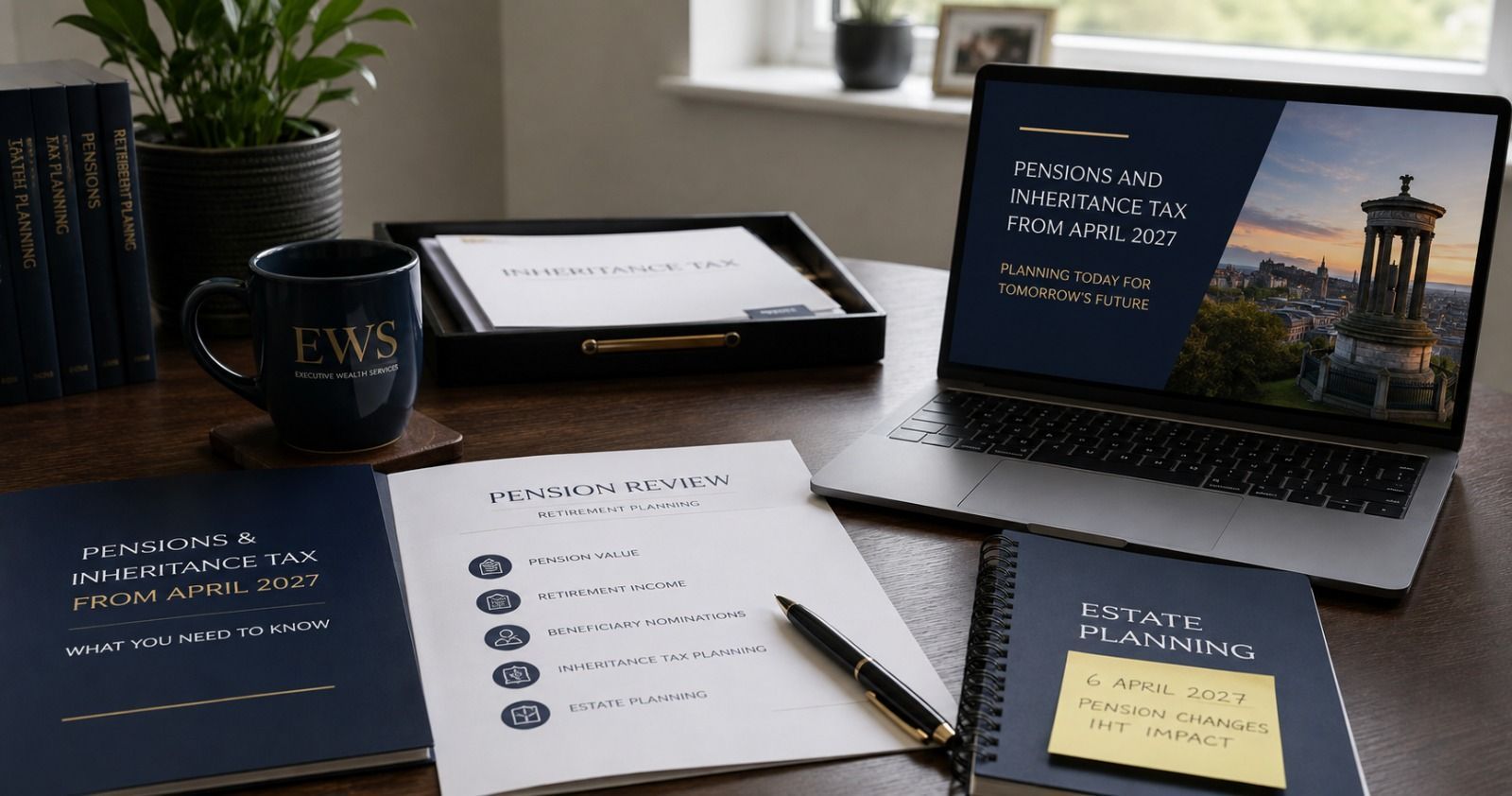
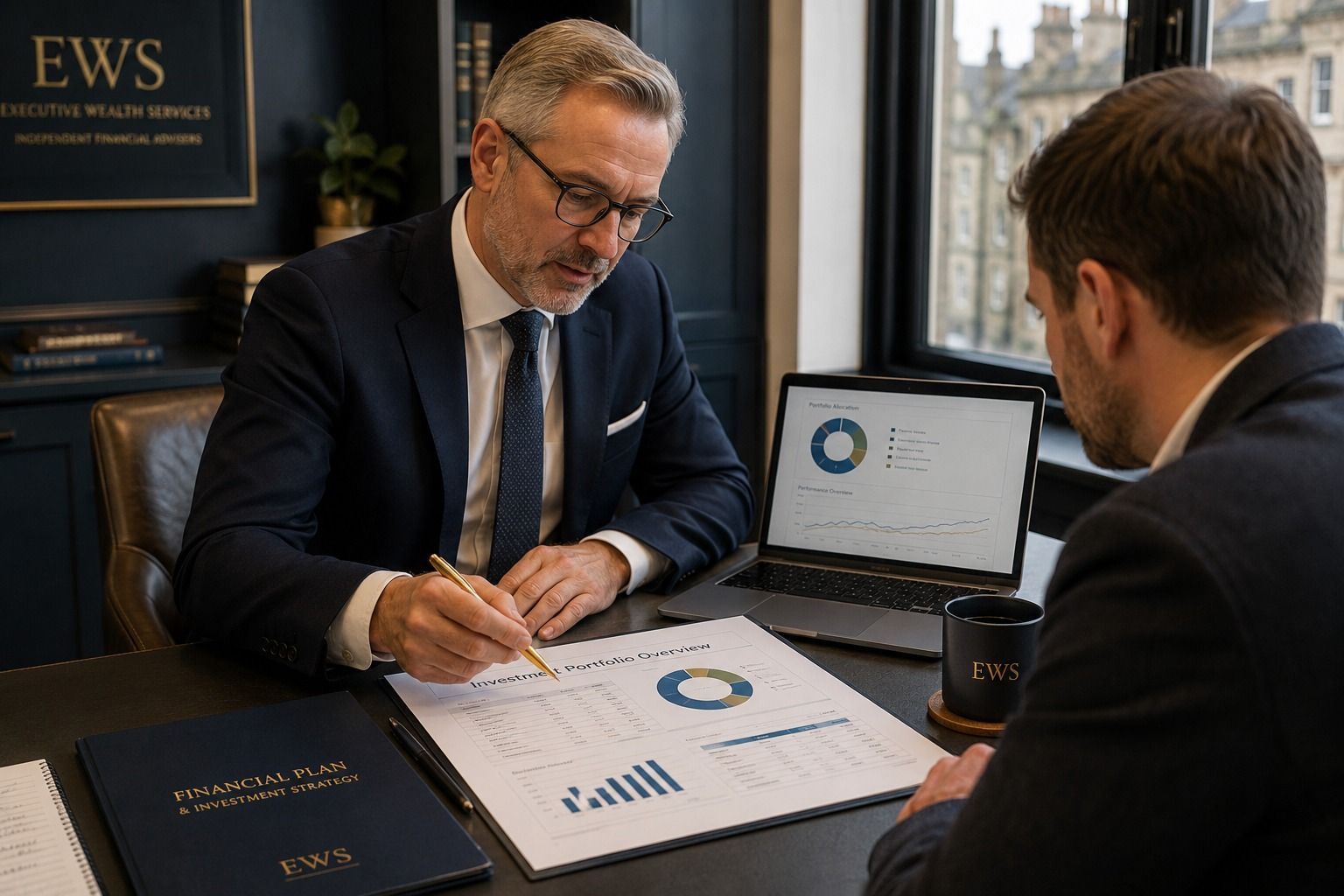
Image placeholder: pension-investment-charges-review-ews-financial-advisers.webp
Image title: Pension and Investment Charges Review
Alt text: Pension and investment charge review documents showing portfolio costs and long-term planning
Why pension and investment charges matter
Charges matter because they reduce the return that remains with the investor.
A difference of 1% or 2% a year may not sound dramatic in isolation. But over a long investment period, particularly where pensions are held for decades, the compounding effect can be significant.
The old EWS article highlighted examples where the annual difference in costs between higher-cost active arrangements and lower-cost passive strategies could be material on larger portfolios. The underlying principle remains important: investors should understand what they are paying, why they are paying it, and whether the arrangement still gives value.
The question is not only “What am I invested in?” It is also “What am I paying for, and is it still appropriate?”
Where hidden or layered charges can appear
Pension and investment charges are not always easy to see from a headline statement.
Some costs may be shown clearly. Others may sit within fund charges, product charges, platform fees or transaction costs. In older contracts, the charging structure can sometimes be harder to compare with modern arrangements.
A review may look at:
- Fund management charges
- Platform or product charges
- Ongoing adviser charges
- Transaction costs
- Exit penalties or transfer costs
- Legacy product charges
- Duplicated funds or overlapping holdings
- Whether the cost is justified by the service or investment approach
Charges should not be looked at in isolation. A low-cost investment can still be unsuitable. A higher-cost arrangement may be justified in some circumstances. What matters is whether the total structure is appropriate for the client.
Active funds, passive funds and cost transparency
One reason charges come under scrutiny is the long-running debate between active and passive investment management.
Active funds usually involve a manager or investment team making decisions about which assets to buy, hold or sell. Passive funds usually aim to track a market index or benchmark at lower cost.
At EWS, the focus is not on treating active or passive investing as a slogan. The focus is on whether the investment approach is suitable, properly diversified, cost-conscious and aligned with the wider financial plan.
Clients who want to understand this in more detail can read our guide to active vs passive investing.
Older pensions and investments may no longer fit
Many people collect financial products over time.
A pension may have been arranged through an old employer. An investment may have been set up years ago for a different purpose. An ISA may have been transferred or left untouched. A product may once have been suitable but no longer match the client’s position today.
This is particularly relevant when life has changed. Retirement may be closer. Income needs may be different. Family circumstances may have shifted. Business interests, inheritance tax concerns or wider estate planning may now matter more than they did when the product was first arranged.
That is why reviewing older pensions and investments should usually be linked to proper pension and retirement planning, rather than treated as a standalone product exercise.
Optional mid-article image placeholder:
Suggested image: premium flat-lay of pension statements, investment reports, fee comparison notes, calculator and gold pen.
Suggested alt text: Review of pension statements investment charges and portfolio costs
What a portfolio review can help identify
A portfolio review is not simply about finding the cheapest fund.
It should look at the overall suitability of the investments, the level of risk, the cost structure, the tax position and the role each holding plays within the wider financial plan.
A review may help answer questions such as:
- Are the current investments still suitable?
- Are the charges clear and reasonable?
- Is there unnecessary fund duplication?
- Is the portfolio properly diversified?
- Is the risk level appropriate?
- Are old pensions still fit for purpose?
- Would consolidation make administration easier?
- Are there tax considerations before making changes?
- Does the portfolio still support the client’s long-term goals?
For clients with larger portfolios, the review can also consider how investments interact with retirement income, tax allowances, business wealth and family succession planning.
Cost should not override suitability
Lower charges can be valuable, but they are not the only consideration.
An investment strategy should not be changed simply because another option is cheaper. It should be changed only where the new structure is more suitable, clearer, better aligned or more cost-effective for the client’s objectives.
This is especially important where pensions include guarantees, protected benefits, exit penalties or other features that may be valuable. Any review should consider what might be lost as well as what might be gained.
For this reason, clients should take care before transferring pensions or investments without advice. The right outcome depends on the detail.
Why independent advice matters
A good review should be led by the client’s objectives, not by a product sale.
Independent financial advice can help compare existing arrangements against suitable alternatives and explain whether change is appropriate. In some cases, the right answer may be to keep what is already in place. In others, a cleaner and more cost-effective structure may be possible.
Executive Wealth Services provides independent investment advice
and financial planning for clients who want a clear view of their pensions, investments and wider financial position.
When should you review pension and investment charges?
It may be worth reviewing your pensions and investments if:
- You are not sure what charges you are paying
- You have pensions or investments in different places
- Your arrangements have not been reviewed for several years
- You are approaching retirement
- You are concerned about underperformance
- You have old contracts from previous employers or advisers
- You have inherited investments
- You want to simplify your financial affairs
- You want to understand whether your portfolio still fits your goals
Clients based locally may also want to speak with a financial adviser in Edinburgh
who can review the full picture across pensions, investments, tax position and long-term objectives.
The EWS view
At Executive Wealth Services, we believe investors should understand the full cost of their pensions and investments.
Charges are not always bad. But they should be clear, justified and proportionate to the value being delivered.
The aim is not to strip a portfolio down to the cheapest possible option. The aim is to build an investment structure that is suitable, transparent, cost-conscious and aligned with the client’s financial plan.
For some clients, this may mean keeping existing arrangements. For others, it may mean simplifying, reducing unnecessary costs, improving diversification or aligning the portfolio more closely with retirement and family wealth planning.
The important point is that the client understands what they hold, what they pay and why it matters.
Speak to EWS about reviewing pension and investment charges
Executive Wealth Services provides independent financial planning and investment advice in Edinburgh, Glasgow and across Scotland.
If you would like to review your pensions, investments, charges or wider financial structure, EWS can help you look at the full picture.
Review your pensions and investments with EWS
If your pensions or investment accounts have not been reviewed for some time, a structured review can help clarify whether your current arrangements remain suitable, cost-effective and aligned with your long-term objectives.
The value of investments can fall as well as rise, and you may get back less than you invested. Pension and investment suitability depends on individual circumstances. This article is for general information only and does not constitute personal financial advice.
```